The Ultimate Guide for Foreign Tourists in Tuscany: Everything You Need to Know Before You Go
Tuscany is universally recognised as one of the most captivating destinations in the world, combining breathtaking landscapes, historic hilltop towns and an unrivalled food-and-wine culture. Yet for international travellers, Italian customs, laws and logistics can feel disorienting at first.
The Ultimate Guide for Foreign Tourists in Tuscany: Everything You Need to Know Before You Go
Imagine waking up to the scent of the sea at Castiglione della Pescaia, wandering through the historic lanes of Orbetello, or enjoying a cool evening breeze at Castel del Piano on the slopes of Monte Amiata. Tuscany — and in particular the stunning Maremma region — is a dream destination that attracts millions of visitors from around the world every year. Travelling to a foreign country, however, also means immersing yourself in a new culture, with rules, customs and dynamics that can be very different from those you are used to.
We at ManageBnb srls, hospitality specialists and leaders in holiday home management in Tuscany, welcome guests every day from Northern Europe, the United States, the United Kingdom and every corner of the globe. We have noticed that the questions travellers ask before departure are almost always the same. That is why, as professional property managers, we have created this comprehensive, SEO-optimised guide to answer all your questions. You will discover how to get around, how to behave in a restaurant, why Italian bureaucracy requires certain documents, and how to enjoy your holiday in complete peace of mind.
1. Bureaucracy and Check-in: Why Does the Host Ask for My Passport?
One of the most frequently asked questions we receive — especially from English-speaking guests — concerns the request for identity documents before or during check-in. Many travellers wonder: "If I have already booked and paid through an international platform, why do I have to send a photo of my passport to a private host?"
The answer lies not in the individual property's policies, but in a precise and strict Italian law (Article 109 of the T.U.L.P.S.). Here are the key points to understand:
- Registration Requirement: Every accommodation in Italy — from five-star hotels to a small short-let apartment in Albinia or Marina di Grosseto — is legally required to register the personal details of every single guest, including minors, within 24 hours of arrival.
- The Alloggiati Web Portal: Your data is not stored by the host for marketing purposes; it is transmitted electronically to a public-security portal run by the Italian State Police called "Alloggiati Web", for public safety and counter-terrorism purposes.
- Tourist Tax (Ricestat/Turismo5): The documents are also used to calculate the correct municipal tourist tax and to submit statistical data to regional tourism portals.
- Your Data Security: By choosing a structured company like ManageBnb srls, you are guaranteed that your documents are collected via encrypted digital systems, in full compliance with the GDPR (the European privacy regulation). This is one of the key differences between an amateur host and professional property management.
2. Tuscan Homes: Climate, Expectations and Comfort
Tuscan architecture is celebrated the world over. Many guests dream of sleeping in ancient stone farmhouses or historic palaces in medieval town centres. It is important, however, to align your expectations regarding modern comfort and Italian living standards.
- Air Conditioning: In the United States or the UAE, centralised air conditioning is standard everywhere. In Italy, that is not the case. Many historic buildings, thanks to their thick stone walls, provide formidable natural thermal insulation. Italy also has strict regional energy-saving regulations that limit the installation, use and temperature settings of air-conditioning systems. In our modern and coastal properties air conditioning is generally available, but we always encourage you to read the specific amenities listed in each listing.
- Linen Standards: Guests often wonder whether they will find clean bed linen or whether they need to bring their own. ManageBnb srls's professional management service includes a hotel-grade linen rental service for holiday accommodations. You will always find quality hotel-standard sheets and a complete set of towels for every guest, rigorously sanitised and professionally ironed.
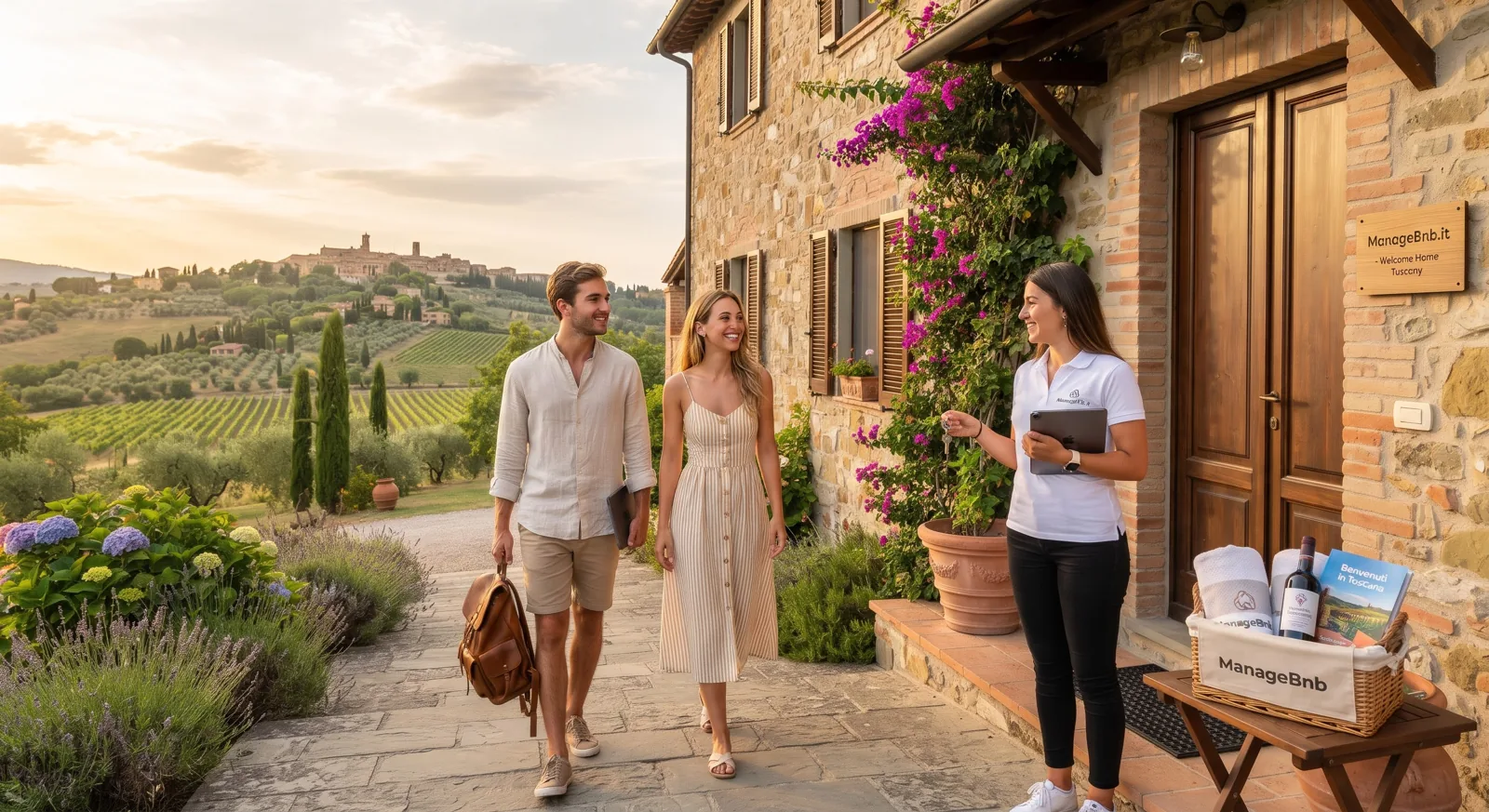
- The Welcome Kit and Essentials: On arrival you will always find a starter pack to make you feel at home straight away, including personal-care products and kitchen essentials, so you can relax from the very first minute.
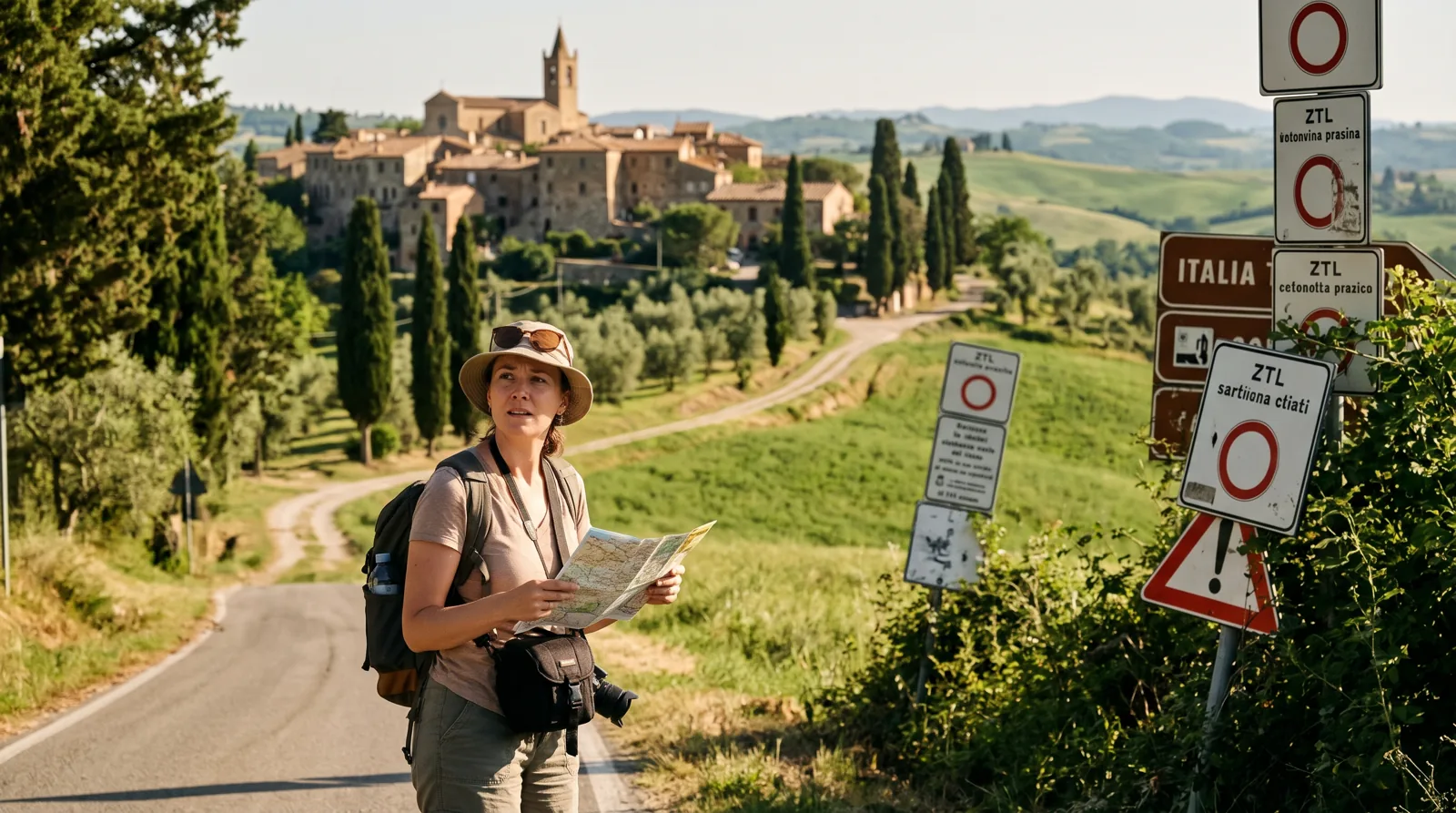
3. Driving and Roads: Car Hire and the "Mystery" of ZTL Zones
Exploring Tuscany by car is a magnificent experience. From the pine forests of Marina di Grosseto to the winding roads climbing towards Castel del Piano, a car gives you unrivalled freedom. But there is one acronym that strikes fear into foreign tourists: ZTL.
A Zona a Traffico Limitato (ZTL) — literally a Limited Traffic Zone — is an area located in the historic centres of almost every Italian city and village where access and circulation by unauthorised vehicles is strictly prohibited.
How to Navigate ZTL Zones in Tuscany:
- Look for the Electronic Signs: At the entrance to every ZTL you will find a sign with an illuminated traffic light. If it reads "ZTL ATTIVA" (or "Varco Attivo" — meaning the zone is active), you cannot enter unless you want to receive a hefty fine (often over €100). If it reads "ZTL NON ATTIVA", entry is permitted — but always pay close attention to the hours shown on the sign.
- The Cameras Never Miss a Thing: ZTL access points are monitored by cameras operating 24 hours a day or during specific time windows. They automatically record your licence plate. If you are driving a hire car, the fine will be sent to the rental agency, which will charge the amount to your credit card — plus an administration fee on top.
- Our Support: When you book through www.booktuscany.it, you will never be left on your own. Before your arrival, our team will provide you with the exact GPS coordinates and directions to the nearest safe car parks outside any restricted zones.
4. Dining Culture: Tips, the Coperto and Local Meal Times
Gastronomy is probably the main reason you chose Italy. Sitting down in a Tuscan restaurant, however, involves a few cultural differences compared to international customs. To help you manage the bill without any confusion, we have put together this summary table:
| Item on the Bill | What is it? | Is it mandatory? | How much is it? |
|---|---|---|---|
| Il Coperto (Cover Charge) |
A historic Italian tradition. It is a fixed charge that covers table service, cutlery, the tablecloth, cleaning and the bread basket. | Yes | Usually between €1.50 and €3.50 per person (may be higher in upmarket venues). |
| La Mancia (Tip) |
In Italy, service costs and staff wages are already included in the menu prices. | No | It is an "extra". Leaving 5–10% or rounding up the bill by a few euros will be greatly appreciated. |
| Drinking Water | Water served in sealed bottles (still or sparkling). Tap water is rarely served in Italian restaurants. | Yes (if ordered) |
On average between €2.00 and €4.00 per bottle. |
Why Meal Times in Italy Matter
Many American or Northern European tourists look for a restaurant for dinner at 5:30 pm or 6:00 pm. In Tuscany, at that hour, you will find the kitchens firmly closed. Dinner typically does not start before 7:30 or 8:00 pm, and restaurants only really fill up around 9:00 pm.
Also bear in mind that many shops (boutiques, delis, artisan workshops), especially in smaller villages, observe an afternoon closing. It is perfectly normal for shops to close between 1:00 pm and 4:30 pm and reopen in the late afternoon, trading until 8:00 pm. This is the perfect time to rest, enjoy the beach or lounge by the pool!
5. Environmental Sustainability: Waste Sorting and Recycling
Italy has some of the most advanced and stringent recycling regulations in Europe. Tourists often find themselves confused by the various coloured bins, and the system varies significantly not only from region to region, but also between neighbouring municipalities. For example, the collection schedule in Castiglione della Pescaia may differ from that in Albinia or Orbetello.
In our areas, many municipalities operate a door-to-door collection system. This means waste must be carefully separated (Plastic, Glass/Cans, Paper, Organic, General Waste) and placed in specific labelled bins outside the front door on set days and at set times.
Sorting waste incorrectly or putting bins out on the wrong day can result in heavy fines from the local council. That is why, in every home managed by ManageBnb srls, you will find clear, intuitive, translated instructions alongside the exact collection calendar for your area. Simply follow our guide and you will play your part in keeping the beautiful Maremma clean.
6. Money and Payments: Can I Pay for Everything by Card?
Yes! In Italy there is a legal obligation for all retailers, restaurant owners and professionals to accept electronic payments via POS terminal, for any amount — even a €1.20 espresso. Visa and Mastercard are accepted everywhere, while American Express may have slightly lower coverage in smaller businesses.
That said, our insider tip is to always keep around €30–50 in cash and some coins in your wallet. They will come in handy for:
- Buying fruit and vegetables at picturesque open-air local markets.
- Leaving a tip at a restaurant (it is not always possible to add one to the card receipt).
- Paying for blue-line parking bays (although many accept cards or apps such as EasyPark, the machines in more remote villages may only take coins).
- Unexpected situations in areas where the POS terminal's internet signal may be temporarily weak.
Frequently Asked Questions (FAQ) for Your Tuscany Holiday
1. Do people speak English in Tuscany?
In areas with a strong tourist trade — main restaurants, hotels and museums — English is widely spoken. However, in the more authentic, smaller villages of inland Maremma, older generations may speak only Italian. Do not worry: the proverbial Italian warmth and plenty of gesturing will get you understood anywhere. By choosing ManageBnb srls, you will also always have our multilingual team on hand via phone or WhatsApp message.
2. Are shops open on Sundays?
In larger towns, shopping centres and popular seaside resorts (such as Castiglione della Pescaia during the summer season), you will find supermarkets and shops open on Sundays. However, in smaller villages and during the low season, Sunday is considered a rest day and almost all shops (except bars and restaurants) will be closed. Plan your food shopping accordingly!
3. Is the tap water in the accommodation safe to drink?
Absolutely yes. Italy's public water supply is continuously monitored, safe and perfectly drinkable. It is true that, due to its high calcium content (which makes it taste "hard"), many Italians — especially in restaurants — prefer bottled water. At home you can drink it without any issues, or opt for bottled water available in any supermarket at very affordable prices.
4. Can I hail a taxi on the street?
Unlike cities such as New York or London, taxis in Italy almost never stop when flagged down in the street. Taxis wait at designated ranks marked with yellow lines (taxi stands), usually located near main squares or railway stations. Alternatively, they must be called via the local radio-taxi number or through dedicated apps. In the rural areas and small villages of Maremma, taxis are scarce; in that case, hiring a car becomes essential.
Tuscany is a place where time slows down, inviting you to savour the beauty of the landscapes and the richness of its traditions. Knowing these ground rules before you leave will transform your experience from that of a confused tourist into that of a truly aware traveller.
That is precisely our goal: to remove every linguistic, logistical and bureaucratic barrier so that all you are left with is the pleasure of your holiday. If you are looking for the perfect stay in Maremma — from the charm of the coast to the tranquillity of the countryside — trust our professional team.
Ready to experience Tuscany for yourself?
Discover our properties and book your next stay by visiting www.booktuscany.it.